
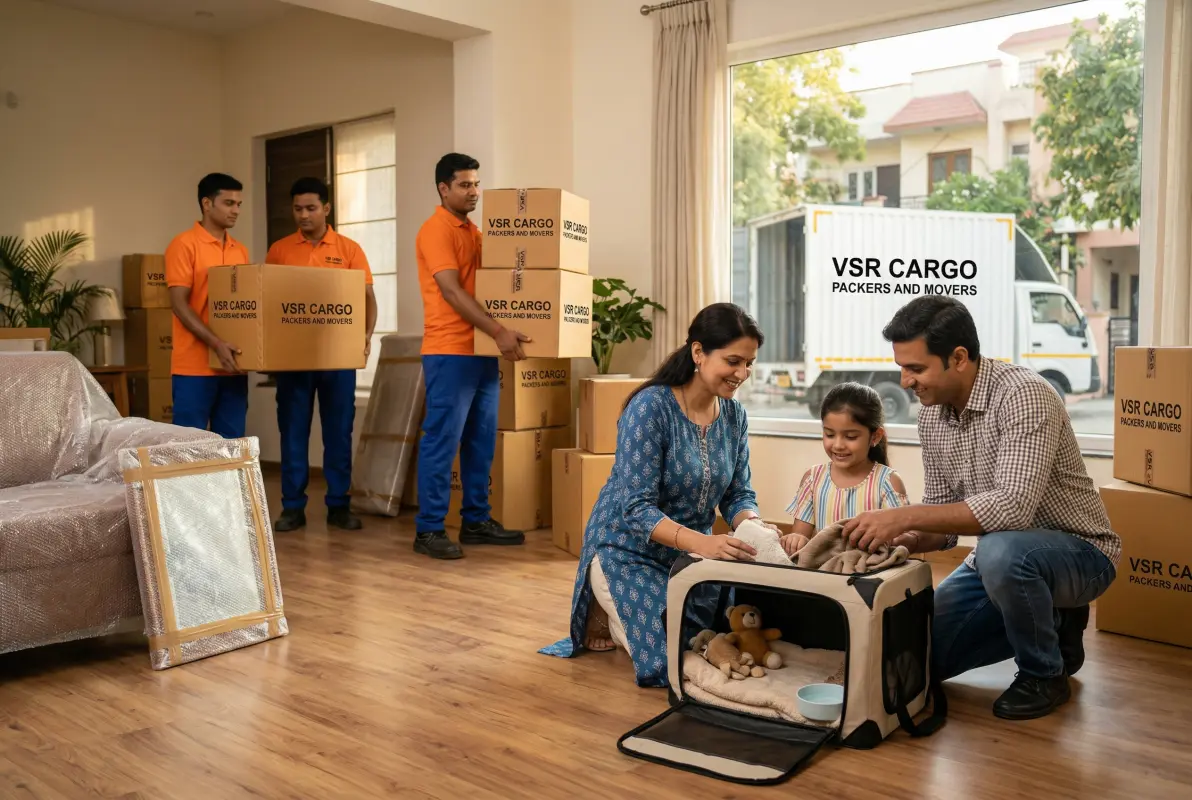
For millions of Indian families, pets are not just animals — they are beloved family members. When the time comes to relocate, ensuring your furry, feathered, or scaled companions make the journey safely and comfortably is just as important as moving your furniture. Yet pet relocation is often an afterthought in the moving process, leading to unnecessary stress for both pets and their owners. This guide covers everything you need to know about moving with pets, whether you are shifting to a new city within India or relocating internationally.
Understanding How Pets Experience Moving
Before diving into logistics, it is important to understand that pets — especially dogs and cats — are creatures of habit. They are deeply attuned to their environment, routines, and the emotional states of their owners. A move disrupts all of these anchors simultaneously. The packing process, the arrival of movers, the emptied rooms, the unfamiliar vehicle journey, and the new smells and sounds of a new home can all be profoundly stressful for animals.
Signs of stress in pets include excessive vocalization, hiding, loss of appetite, aggression, digestive upset, and unusual clinginess or withdrawal. With careful preparation and the right approach, you can minimize these stress responses and help your pet adjust to the new environment more quickly.
Before the Move: Preparation Steps
Visit the Veterinarian
Schedule a veterinary visit at least 4 to 6 weeks before your move. This visit serves multiple important purposes. First, your vet can give your pet a general health check to ensure they are fit for travel. Second, they can update all vaccinations, which may be required for interstate travel or international relocation. Third, you can discuss anxiety management options — many vets recommend natural calming supplements, pheromone sprays, or in some cases mild sedatives for particularly anxious animals.
Also obtain a recent health certificate from your vet. This document is required for air travel with pets and for many interstate or international moves. Ensure your pet's microchip information is up to date with your new contact details before you move.
Prepare Your Pet's Travel Carrier
If your pet will be traveling in a carrier, introduce the carrier several weeks before moving day so it becomes a familiar, safe space rather than an anxiety trigger. Place the carrier in your pet's favorite area with their bedding inside. Encourage them to eat near, then in, the carrier. Over time, your pet will associate the carrier with comfort and safety rather than trips to the vet.
Choose an airline-approved, well-ventilated, size-appropriate carrier. The pet should be able to stand, turn around, and lie down comfortably. For dogs, a carrier that allows them to stand at full height is important, especially for longer journeys. Label the carrier clearly with your pet's name, your contact number, and your destination address.
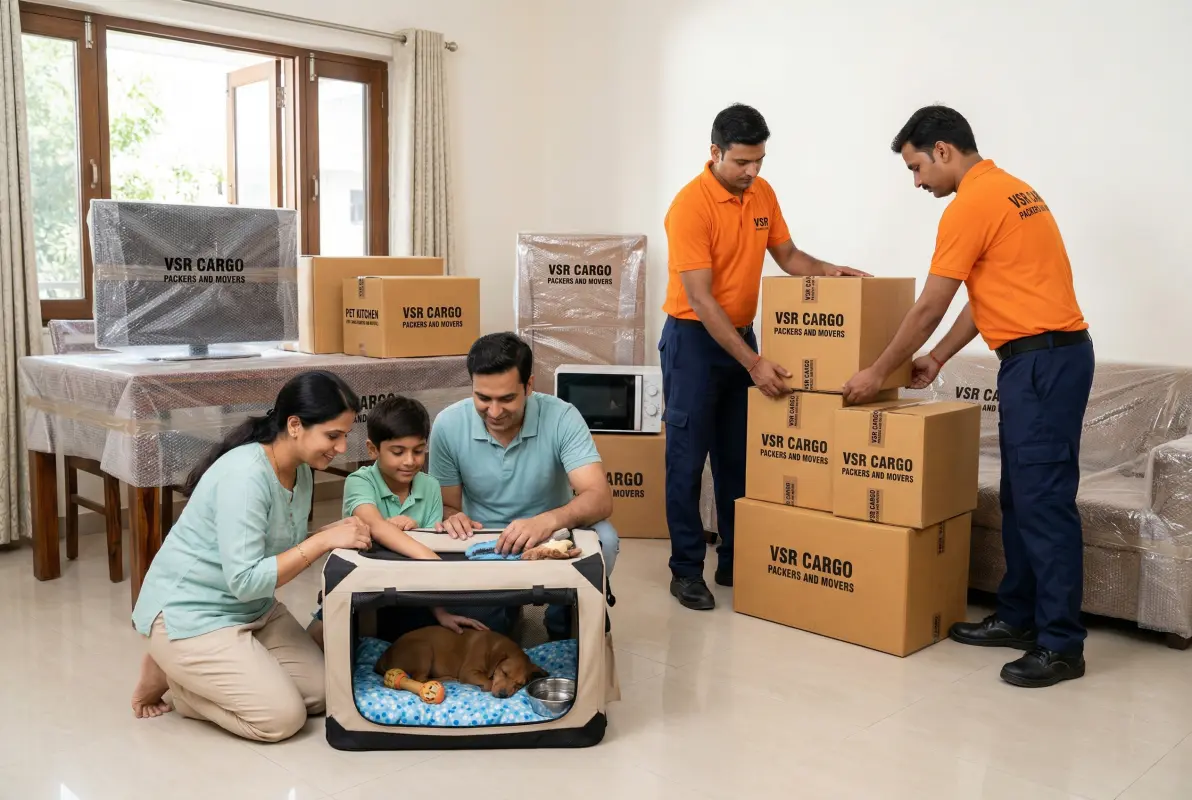
Proper planning and safe transport ensures even your pets have a comfortable relocation experience.
On Moving Day: Keeping Pets Safe and Calm
Moving day is the most chaotic and potentially stressful day for your pet. Doors are constantly opening and closing, strangers are moving through the house, furniture is being disassembled, and the normal routine is completely disrupted. To protect your pet and the movers, keep your pet in a quiet, secure room with the door clearly labeled "DO NOT OPEN – PET INSIDE."
Place your pet's bed, favorite toys, water bowl, and food in this room so they have familiar items around them. If possible, have a trusted family member or friend stay with the pet throughout the day, away from the moving activity. For highly anxious pets, consider boarding them at a pet hotel or leaving them with a trusted friend for the duration of moving day.
Never transport your pets in the moving truck. Moving trucks are not temperature-controlled, are extremely loud, and do not have adequate ventilation for animals. Pets must travel with you in your personal vehicle, or via a dedicated pet transport service. Keep the vehicle cool and well-ventilated, and plan rest stops every 2–3 hours for longer journeys to allow your pet to stretch, drink water, and relieve themselves.
Settling Into the New Home
When you arrive at your new home, do not immediately give your pet full access to the entire house. Instead, confine them to one room initially — set up their bed, toys, food, and litter box (for cats) in this room, and let them explore and adjust at their own pace. This prevents overwhelming them with too many new smells and spaces at once.
Gradually introduce your pet to other rooms over several days. Spend extra time with your pet during the first week — familiar company is tremendously reassuring during a transition. Maintain their feeding and exercise routine as closely as possible, as routine provides crucial stability during a period of change.
For cats in particular, keep them indoors for at least 3–4 weeks after the move to allow them to fully acclimatize to the new environment before venturing outside. Cats that are let out too soon after a move sometimes attempt to return to their old home and can get lost in the process.
Interstate Pet Travel in India: Key Requirements
Moving between states in India with pets is generally straightforward but involves a few key requirements. Most states require a health certificate from a registered veterinarian, issued within 7–10 days of travel. Some states have specific regulations regarding certain dog breeds, particularly large or aggressive breeds.
If you are traveling by air within India with your pet, Indian airlines have specific policies regarding pet carriage — most require advance booking, a health certificate, and a fee. Small pets may be allowed in the cabin as carry-on in an approved carrier, while larger pets typically travel as checked baggage or cargo. Always verify the specific airline's current pet policy well in advance of your travel date.
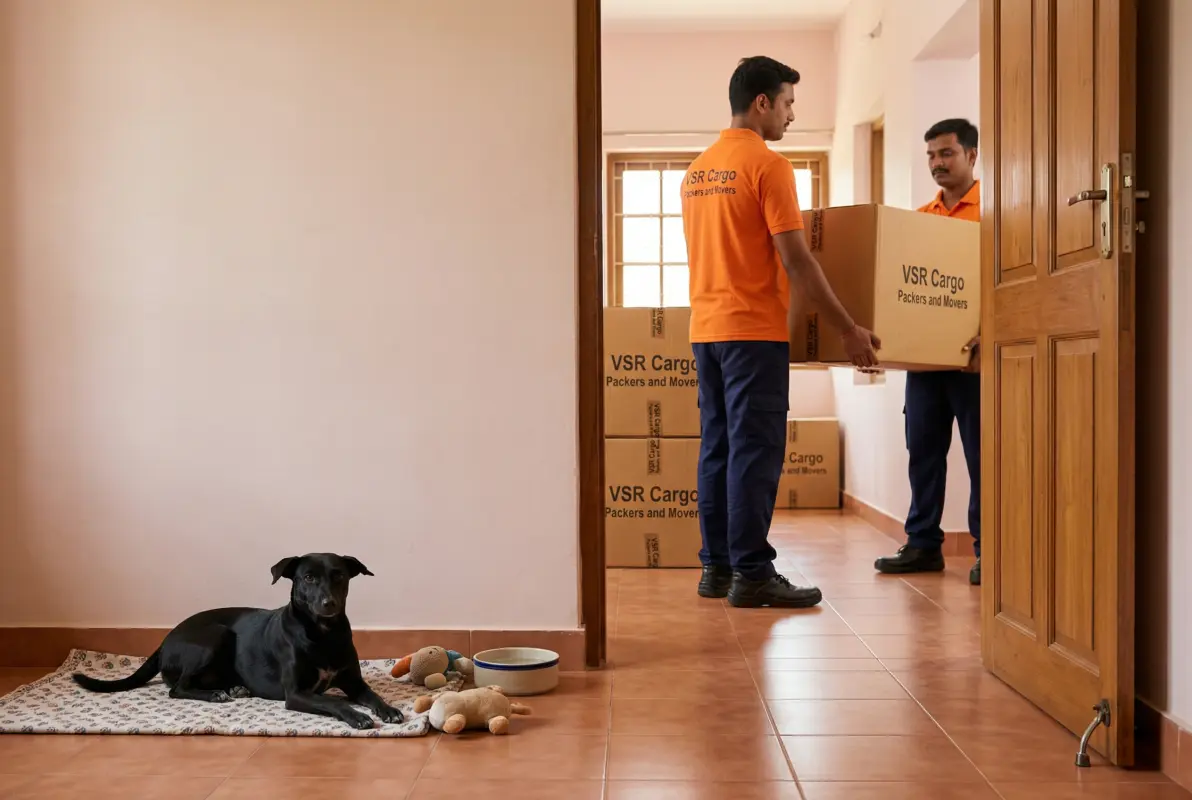
Keeping pets in a quiet, secured room during the move prevents anxiety and accidents.
International Pet Relocation: What You Need to Know
International pet relocation is significantly more complex than domestic travel. Each country has its own import requirements for animals, including mandatory vaccinations (particularly rabies), microchipping, blood tests (some countries require a rabies titer test), quarantine periods, and specific health certificates on official government-issue forms.
Countries like Australia, New Zealand, Japan, and the UK have some of the strictest pet import requirements in the world, with mandatory quarantine periods that can range from 10 days to several months. Countries in the Middle East, USA, and Canada tend to have less stringent requirements, though specific vaccinations and documentation are still mandatory.
The process for international pet relocation typically takes 3–6 months to complete from start to finish due to the various testing and waiting periods involved. Begin the process as early as possible and consult with a specialized pet relocation agent for your specific destination country.
Quick Tips for Specific Pets
- Dogs: Maintain exercise routine, avoid feeding 4–6 hours before travel to prevent motion sickness, bring favorite toy or blanket for comfort
- Cats: Use pheromone sprays (Feliway) in the carrier and new home, keep indoors 3–4 weeks post-move, provide hiding spots in new home
- Birds: Cover the cage during transit to reduce visual stimulation, maintain temperature between 18–28°C, avoid drafts
- Fish: Transport in specialized sealed bags with oxygen, move tank separately, set up in new location at least a day before reintroducing fish
- Small mammals (rabbits, guinea pigs): Keep cage covered, minimize handling during transit, maintain familiar bedding and food
Planning a Move with Your Family?
VSR CargoPackers and Movers provides stress-free household relocation services across India. Our professional team handles your belongings with the same care you give your family — including your pets.
Conclusion
Moving with pets requires additional planning and patience, but with the right preparation, you can ensure your beloved companions make the transition safely and with minimal stress. The key is to prepare well in advance, maintain familiar routines as much as possible, keep your pet's comfort and safety at the center of every decision, and give them the time and reassurance they need to settle into their new home.
At VSR CargoPackers and Movers, we understand that your family — including your pets — is your priority. Our household relocation services are designed to minimize disruption for your entire family. Get in touch with our team today to discuss your upcoming move.